
Glulam Manufacturing Process
Glulam, or glued laminated timber, is a high-performance engineered wood product created by bonding together layers of carefully selected timber under controlled conditions.
Preparation of Laminations:
Timber is strength graded and inspected, with defects such as knots, splits, and irregularities removed to ensure only suitable structural material is used.
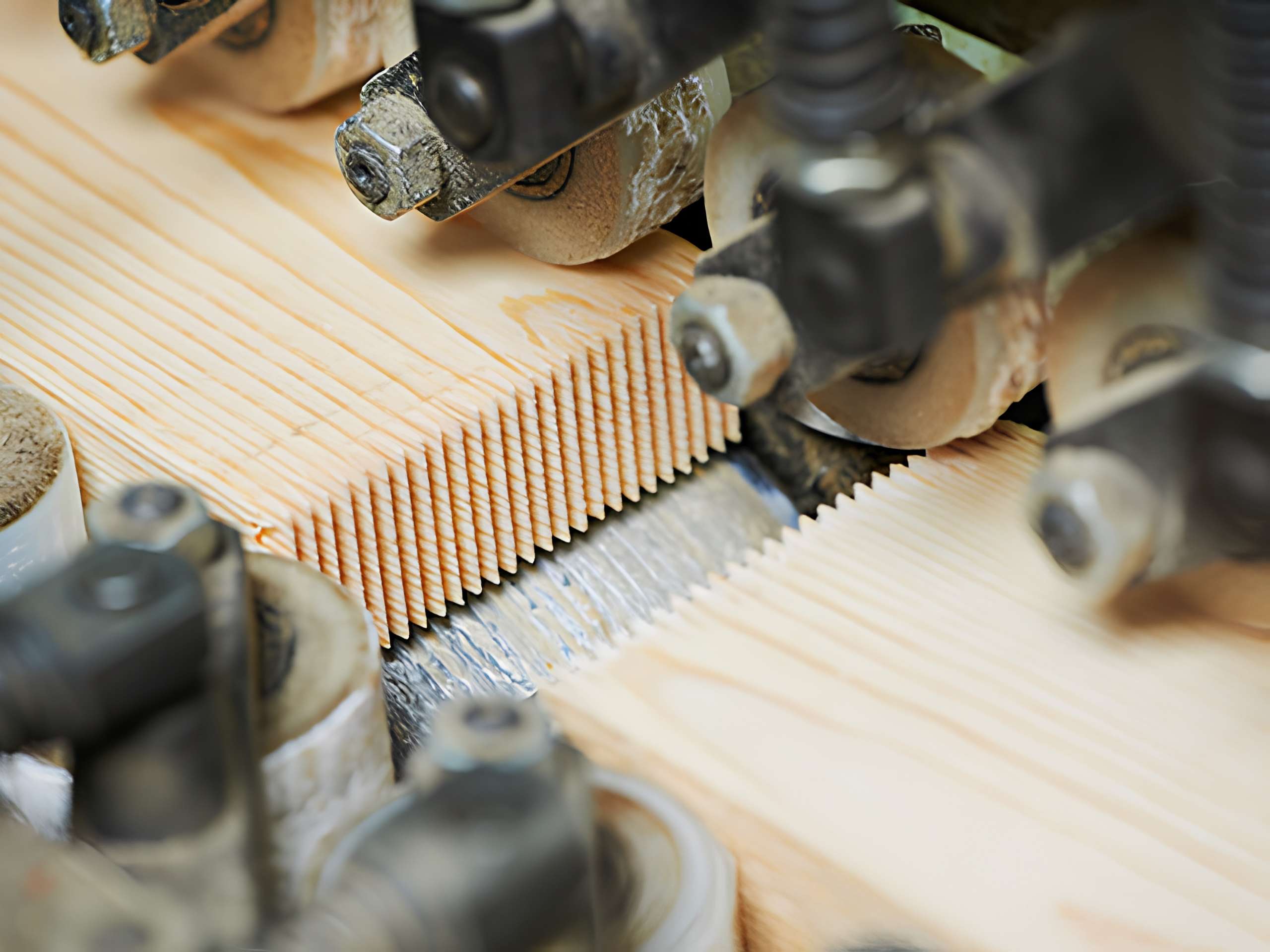
Lengths are then joined using finger joints. Interlocking profiles are machined into each end, bonded with structural adhesive, and pressed under controlled conditions to form continuous laminations. This creates strong, reliable joints and allows shorter sections to be combined into longer members with consistent properties.
Finger joints are routinely tested to confirm strength and compliance with performance standards.
By removing defects and forming continuous laminations, glulam is more controlled and predictable than solid timber, ensuring consistent structural performance.

Glulam Strength Grades and Lamination Assembly
Glulam beams are formed from multiple strength-graded timber laminations, all aligned with the grain running along the length of the member to maximise tensile performance.
Each lamination is graded into T classes (typically from T14–T16 up to higher grades such as T20–T24), defining tensile strength parallel to the grain and ensuring the timber is assessed on its ability to resist tension.
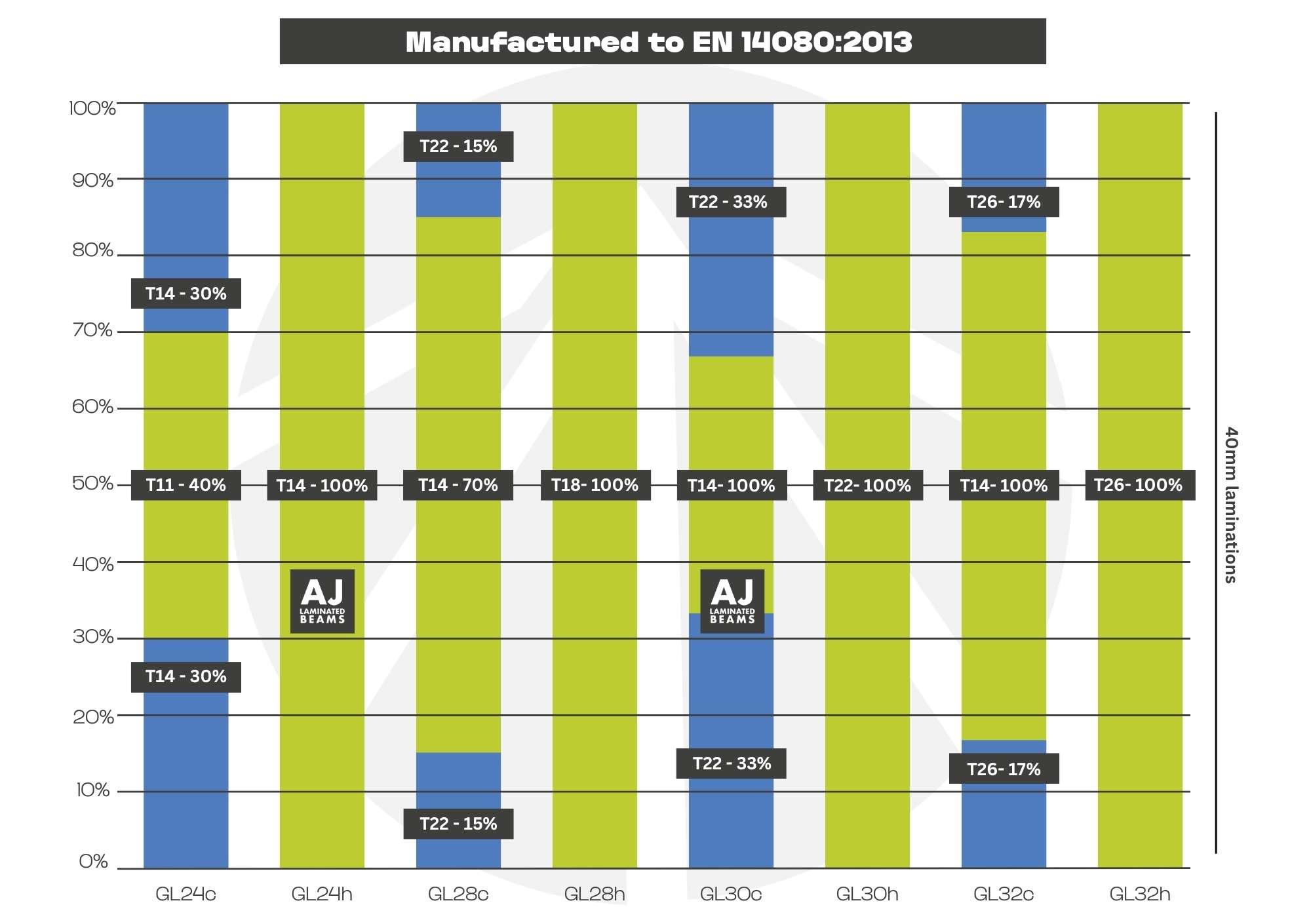
The laminations are then glued and stacked under controlled conditions to form grades such as GL24h and GL30c. Homogeneous grades like GL24h use laminations of similar strength, while combined grades such as GL30c incorporate higher tensile laminations to achieve increased structural capacity.
One lamination is typically oriented with its growth rings reversed, helping to balance movement and improve stability.
Glulam Strength Grades and Lamination Assembly
Glulam beams are formed from multiple strength-graded timber laminations, all aligned with the grain running along the length of the member to maximise tensile performance.
Each lamination is graded into T classes (typically from T14–T16 up to higher grades such as T20–T24), defining tensile strength parallel to the grain and ensuring the timber is assessed on its ability to resist tension.
The laminations are then glued and stacked under controlled conditions to form grades such as GL24h and GL30c. Homogeneous grades like GL24h use laminations of similar strength, while combined grades such as GL30c incorporate higher tensile laminations to achieve increased structural capacity.
One lamination is typically oriented with its growth rings reversed, helping to balance movement and improve stability.
Strength Specification Sheet
The chart below illustrates the typical lamination arrangements used within common glulam strength grades.
We typically stock both GL24h homogeneous grades and higher strength GL30c combined grades manufactured from European Whitewood (Picea abies) to EN 14080:2013.
Bonding Process and Adhesive
Glulam beams are typically manufactured in lengths of up to 24 metres, allowing for efficient production before being cut to standard sizes such as 12 and 8 metres for transport and use.
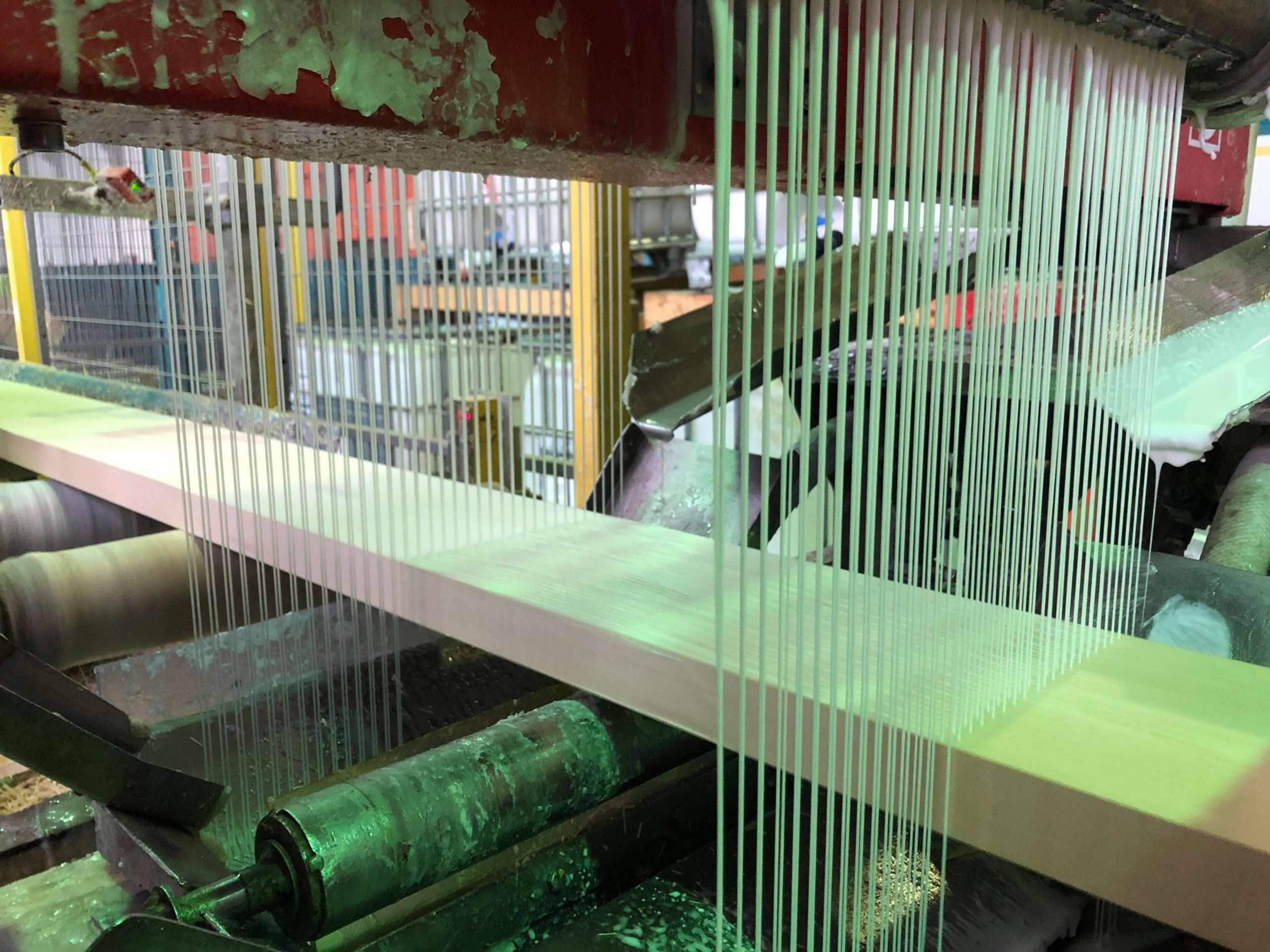
After assembly, the laminations are pressed and passed through a high-frequency curing system. This uses electromagnetic energy to rapidly cure the structural adhesive, enabling a controlled, continuous bonding process.
The adhesive used is a structural glue, commonly melamine-urea-formaldehyde (MUF) or polyurethane (PUR), designed to form durable, moisture-resistant bonds with reliable structural performance.
Finishing and Quality Control
Once formed, the beam is passed through a planer to achieve the required finish, and the ends are square cut.
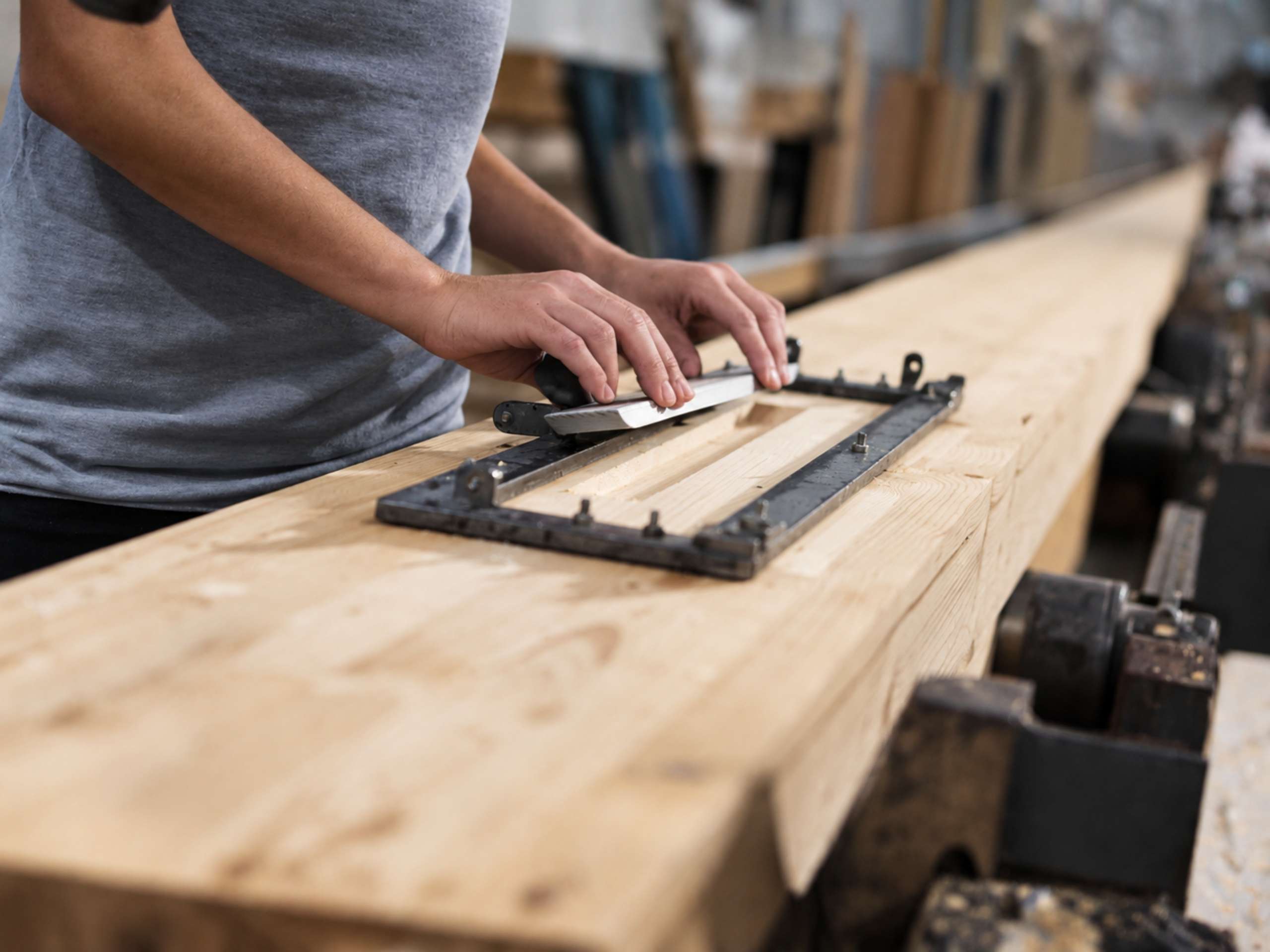
It then undergoes a further visual quality check. Any excessive knots or defects outside permissible limits are removed using a router, plugged, and re-sanded to meet the required non visual or visual grade.
Packing and Protection
The finished beams are stacked into packs and securely wrapped with a UV-protective layer. An additional outer wrap is applied to stabilise the stack and protect the beams during transportation. Once delivered to our yard, the beams are unwrapped and stacked in the workshop, ready for cutting, machining, and preparation to meet customer requirements.