
Fixings and Connections
A glulam beam is only one part of a structural system.
How it connects to the rest of the structure is just as important as the beam itself.
Fixings & Connections
Connections influence structural performance, installation on site, appearance, and sequencing. When they’re considered early and coordinated properly, projects run more smoothly and with fewer compromises.
This page provides a practical overview of common connection types used with glulam beams and explains how we support their supply as part of an engineer led design.
All fixings and connections must be designed and approved by a qualified structural engineer.
AJ Laminated Beams does not design or specify connections. Our role is to support the engineer’s design by preparing beams accurately and, where required, supplying compatible connection components.
Why Connections Matter
Connections are often treated as a detail to be resolved later, but they affect key aspects of a build from the outset.
They influence:
How loads are transferred through the structure
How beams are installed and handled on site
Whether fixings are visible or concealed
Build sequencing and coordination
Considering connections alongside the beam design leads to clearer decisions and fewer surprises later in the project.

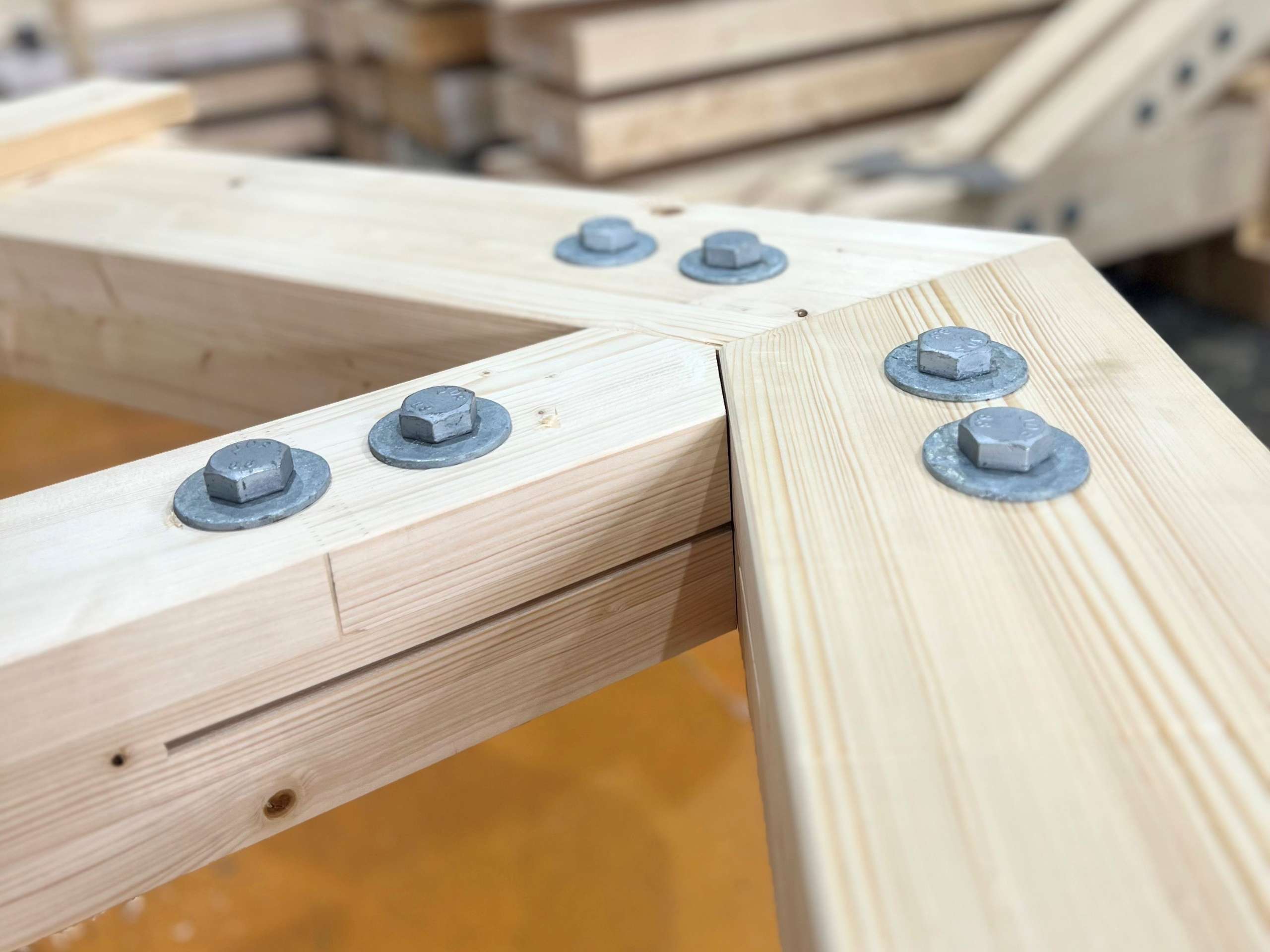
Common Types of Glulam Connections
The connection types below are widely used in timber and hybrid structures. The exact detail will always depend on the engineer’s design, but understanding the options helps conversations happen earlier and more clearly.
Joist Hangers
Typical use
Supporting secondary beams or joists where they connect into a primary glulam beam or wall.
Why they’re used
Joist hangers provide a clear load path and simplify installation, particularly where multiple members connect into a single beam. They are common in residential floors, roofs, and extensions.
Angle Brackets and Plates
Typical use
Fixing beams to posts, walls, or other structural elements where members meet at right angles or require restraint.
Why they’re used
They provide strength and stability while allowing flexibility in how elements are assembled on site. Often used where timber connects to timber, masonry, or steel.
Timber-to-Timber Connectors
Typical use
Joining two timber elements together, either inline or at an angle.
Why they’re used
These connectors help transfer load cleanly between members and are often used where traditional carpentry joints aren’t practical or where additional strength is required.
Post Bases and Caps
Typical use
Supporting glulam posts or columns at foundations, slabs, or supporting structures.
Why they’re used
They provide a defined load path and, where required, help protect timber elements from ground contact. Common in exposed or external structural applications.
Restraint Straps and Ties
Typical use
Tying beams back to masonry or other structural elements to control movement and provide restraint.
Why they’re used
They play a key role in overall structural stability, particularly where timber meets masonry construction.
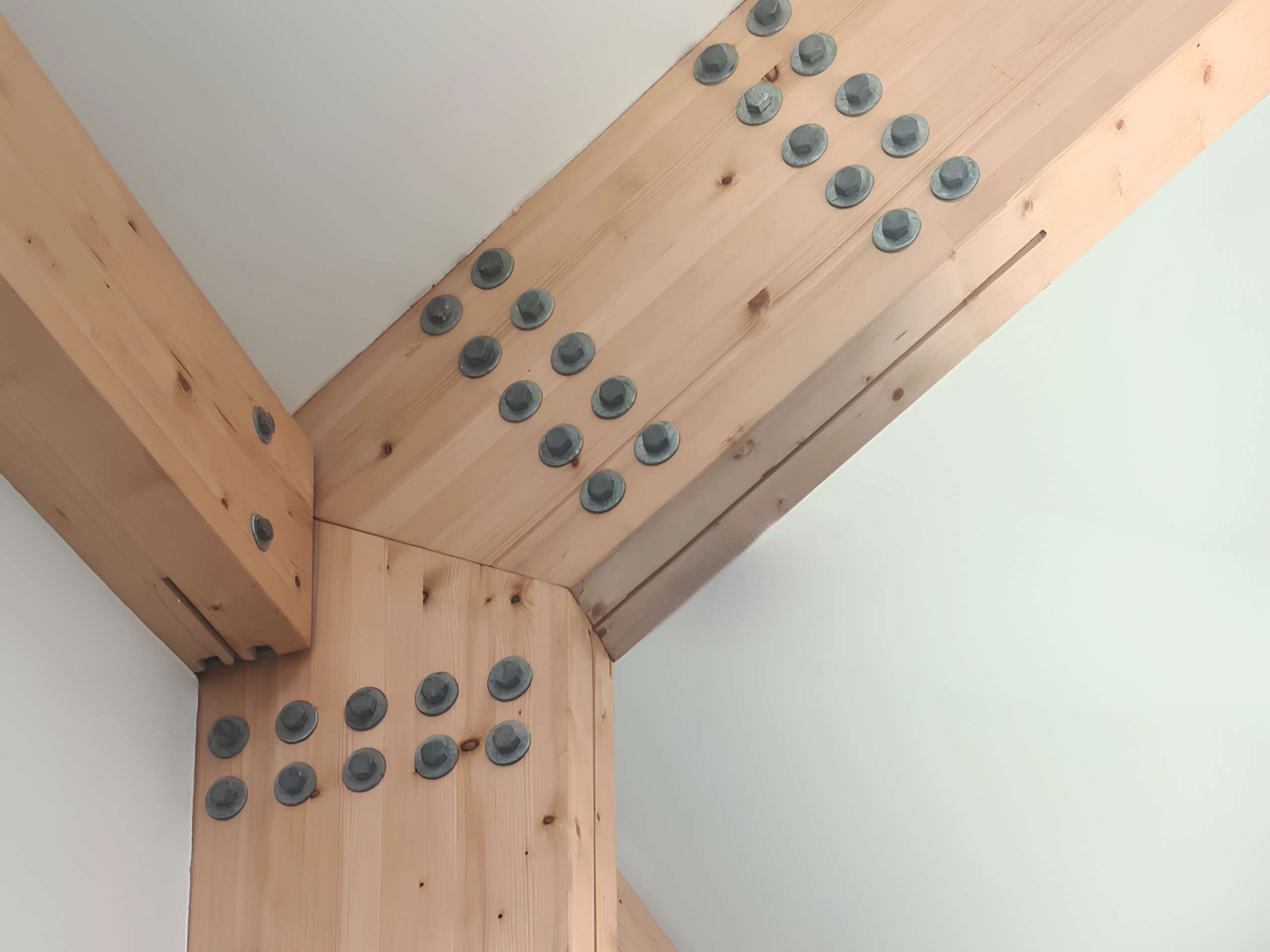
Concealed Connections
Typical use
Creating strong connections with minimal visible hardware, often where glulam is exposed architecturally.
Why they’re used
Concealed connectors allow structural connections to be hidden within the timber, improving appearance while maintaining performance. Often used in feature structures and open interiors.
Industry-Tested Systems
The connection types described above are widely used across the construction industry and are manufactured by established specialist suppliers such as Rothoblaas and Simpson Strong-Tie.
These systems are designed specifically for timber and hybrid structures and are commonly specified by structural engineers working with glulam.
We are currently reviewing a practical range of commonly used connectors and fixings to support everyday glulam applications. As the range of available systems is extensive, this process is being approached carefully to ensure the products we eventually hold in stock are useful, compatible, and relevant to the types of beam orders we commonly supply.
As this develops, further information on available fixing systems will be added to the website.
Coordinated Supply of Beams and Fixings
Where specified by the structural engineer, we can support the supply of a small, sensible range of standard connectors compatible with our glulam beams and commonly used in timber construction.
Importantly, we can also machine the glulam beams to suit the required connection details, helping ensure compatibility between the timber, steelwork, and fixings before delivery to site.
This coordinated approach can help to:
- Reduce procurement time
- Ensure compatibility between beams and connectors
- Simplify installation and site coordination
- Reduce the need for additional site modification
All fixings and machining details remain subject to engineer approval.
Our aim is not to replace specialist suppliers, but to support a more coordinated and efficient installation process where it adds value.